Open-source · Go · MCP-native
Ground your AI agents in real-world human problems and production battle-scars.
Claude Code, Cursor and Antigravity write the happy path. OpenStories hands them what production already taught everyone else: user stories with Gherkin criteria, the edge cases that broke real systems, and the GitHub issues, Reddit threads and post-mortems that prove it.
The happy-path bias
Your agent has never been paged at 3 AM.
Ask a coding agent for a magic-link login and it will write one that works in the demo. It has no way of knowing that Microsoft Defender pre-fetches every link in an inbound email, burning the one-time token before a human ever clicks. Someone on GitHub knows. Someone on Reddit ranted about it. OpenStories puts that knowledge in the agent's context before it writes a line.
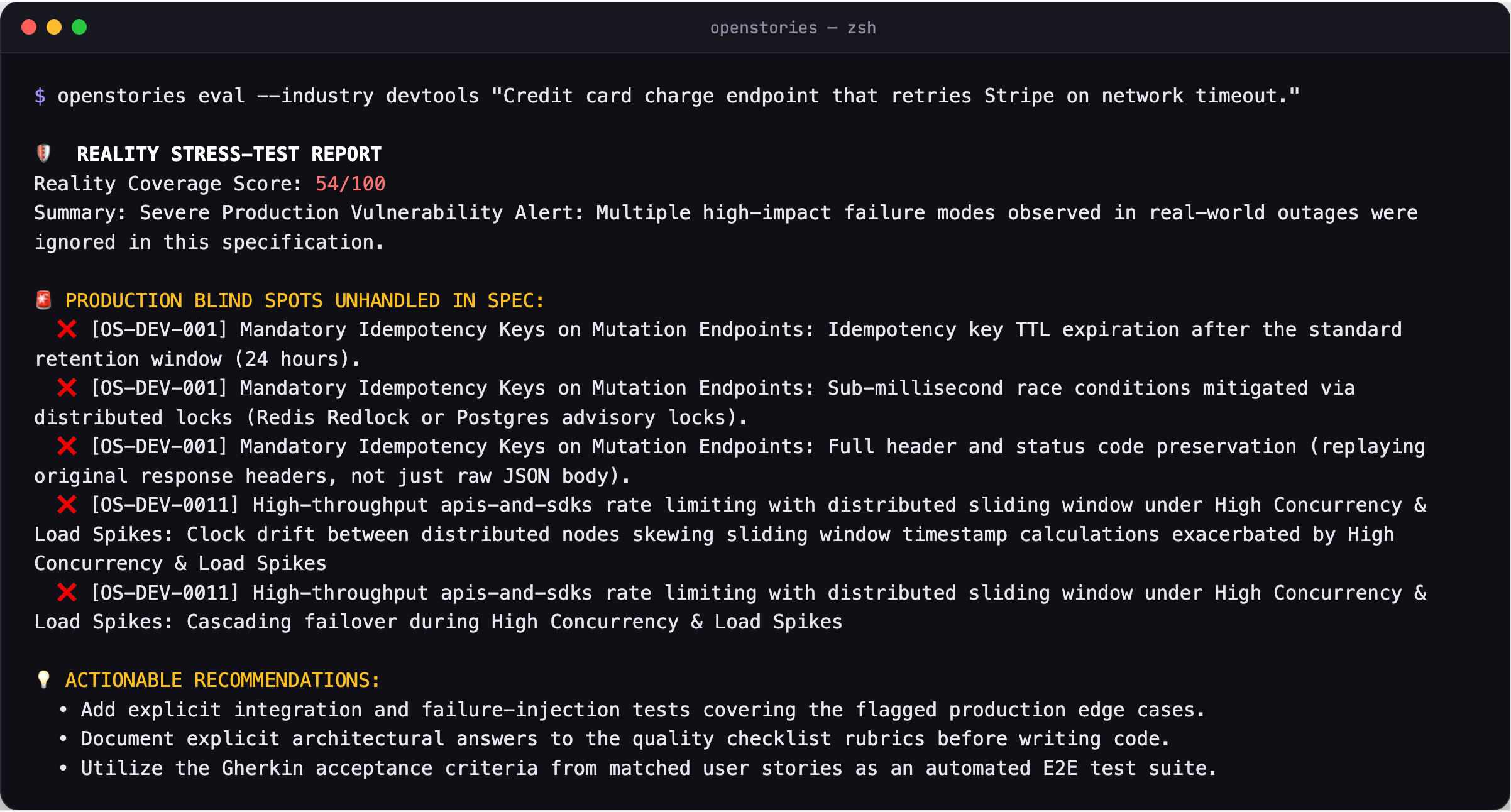
openstories eval on a one-line spec. Every blind spot cites a story, every story cites its evidence.Reality stress-tester
Type a feature. See what production would have said.
The same engine as openstories eval: your spec is matched against the library, every known edge case it does not mention counts against it. Pick a sample or write your own.
Production blind spots unhandled in spec
No blind spots against the matched stories. The spec names the failure modes the library knows about.
Incident showcase
Stories that started as someone's outage.
Five of the curated stories, each with its acceptance criteria and the public evidence behind it. Click the quotes; they go to the source.
1-click MCP setup
Two commands. Your agent reads the library before it writes.
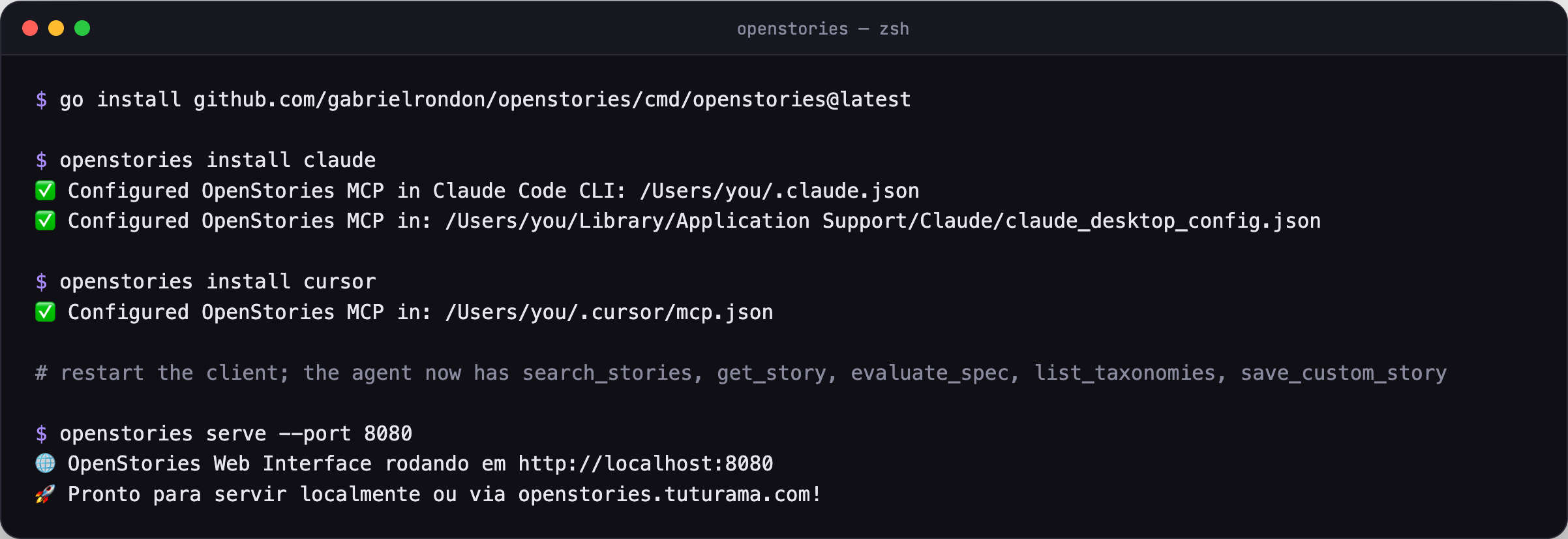
openstories install claude writes the MCP entry into ~/.claude.json and Claude Desktop. openstories install cursor does the same for ~/.cursor/mcp.json.- Install the binary.
go install github.com/gabrielrondon/openstories/cmd/openstories@latest. Zero dependencies, the library is embedded. - Register the MCP server.
openstories install claudeoropenstories install cursor. Restart the client. - Ask before you build. "What does production say about magic links?" The agent calls
search_storiesand gets the criteria, the edge cases and the citations. - Lint the spec.
openstories eval --file spec.mdin CI, or theevaluate_spectool from inside the agent.
Also: openstories serve runs the web dashboard and a REST API (/api/stories, /api/eval) on your machine. openstories harvest --repo mines a public repo's issues into new stories.
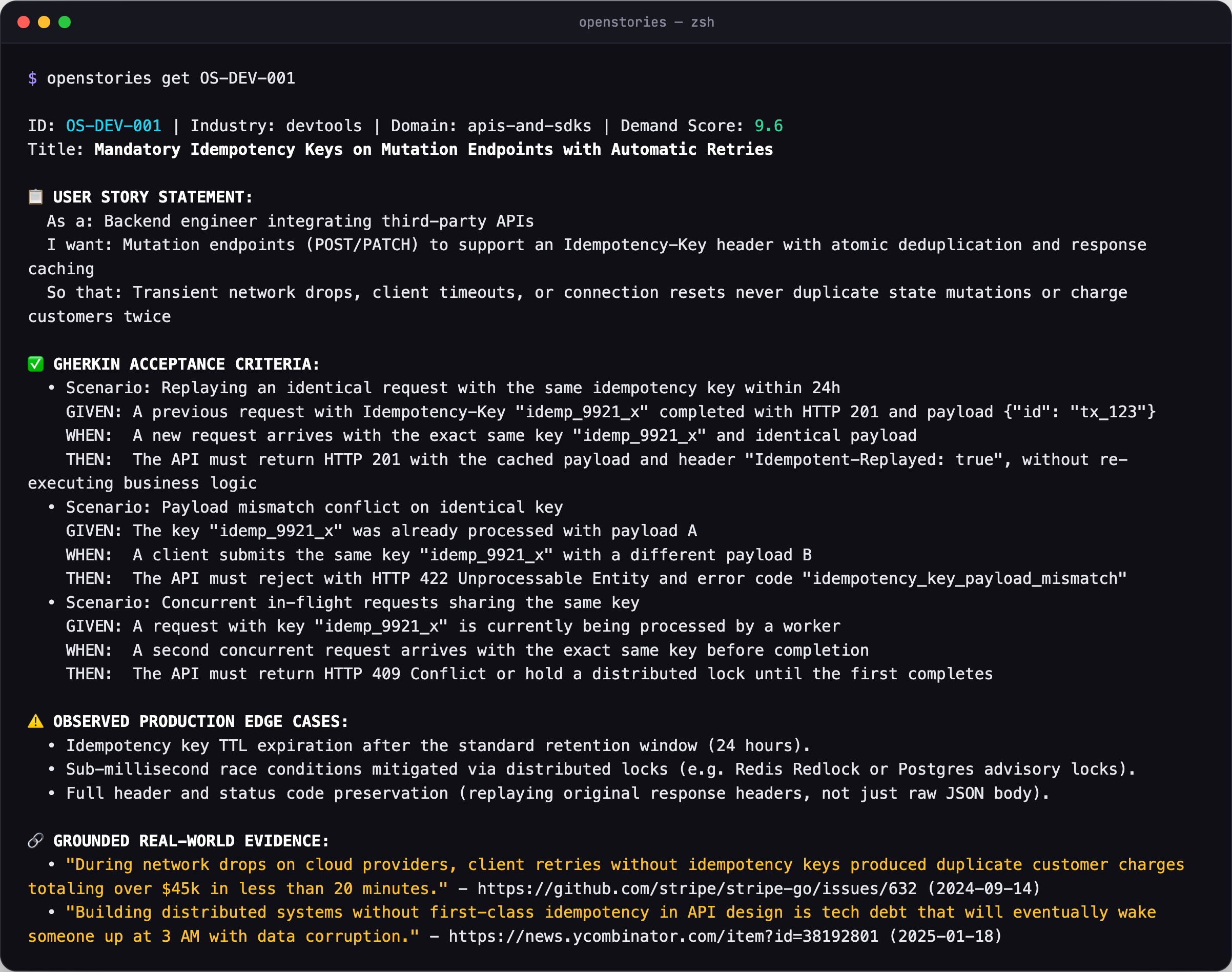
openstories get OS-DEV-001. Idempotency keys on mutation endpoints, with the $45k duplicate-charge incident that made someone write it down.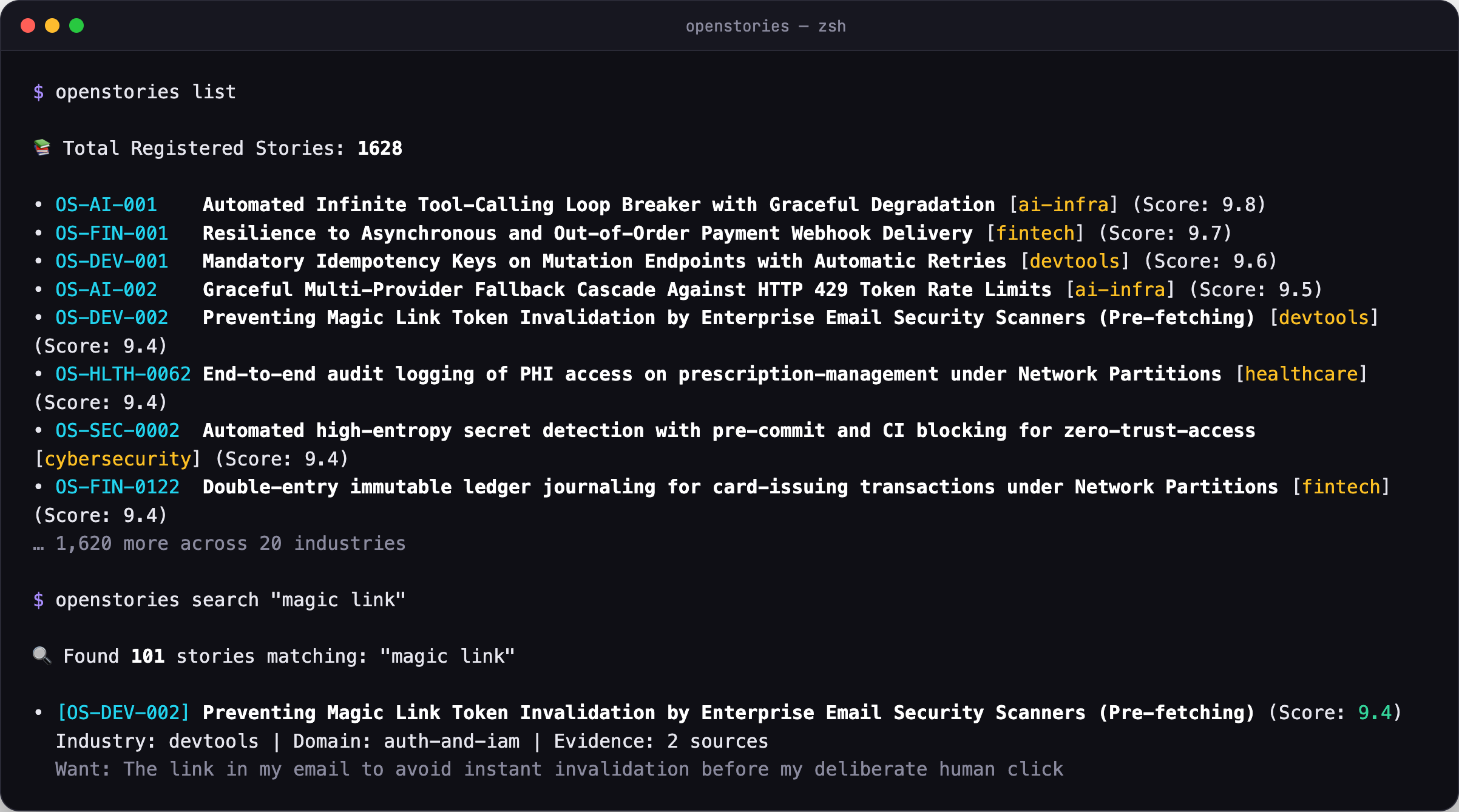
openstories list and openstories search. Every story has an id, an industry, a domain and a demand score.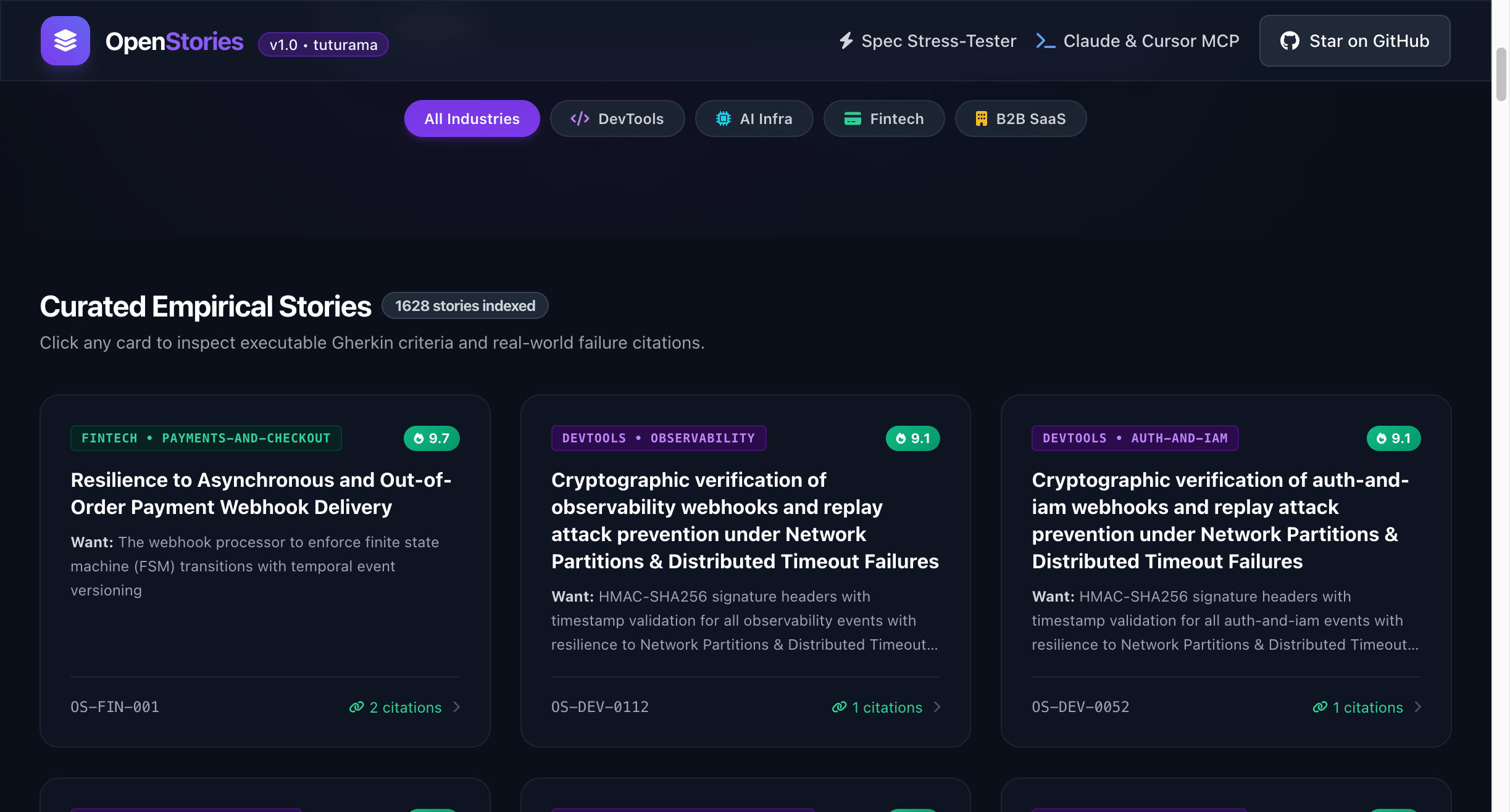
openstories serve. The same library in a local dashboard, filterable by industry, domain and demand score.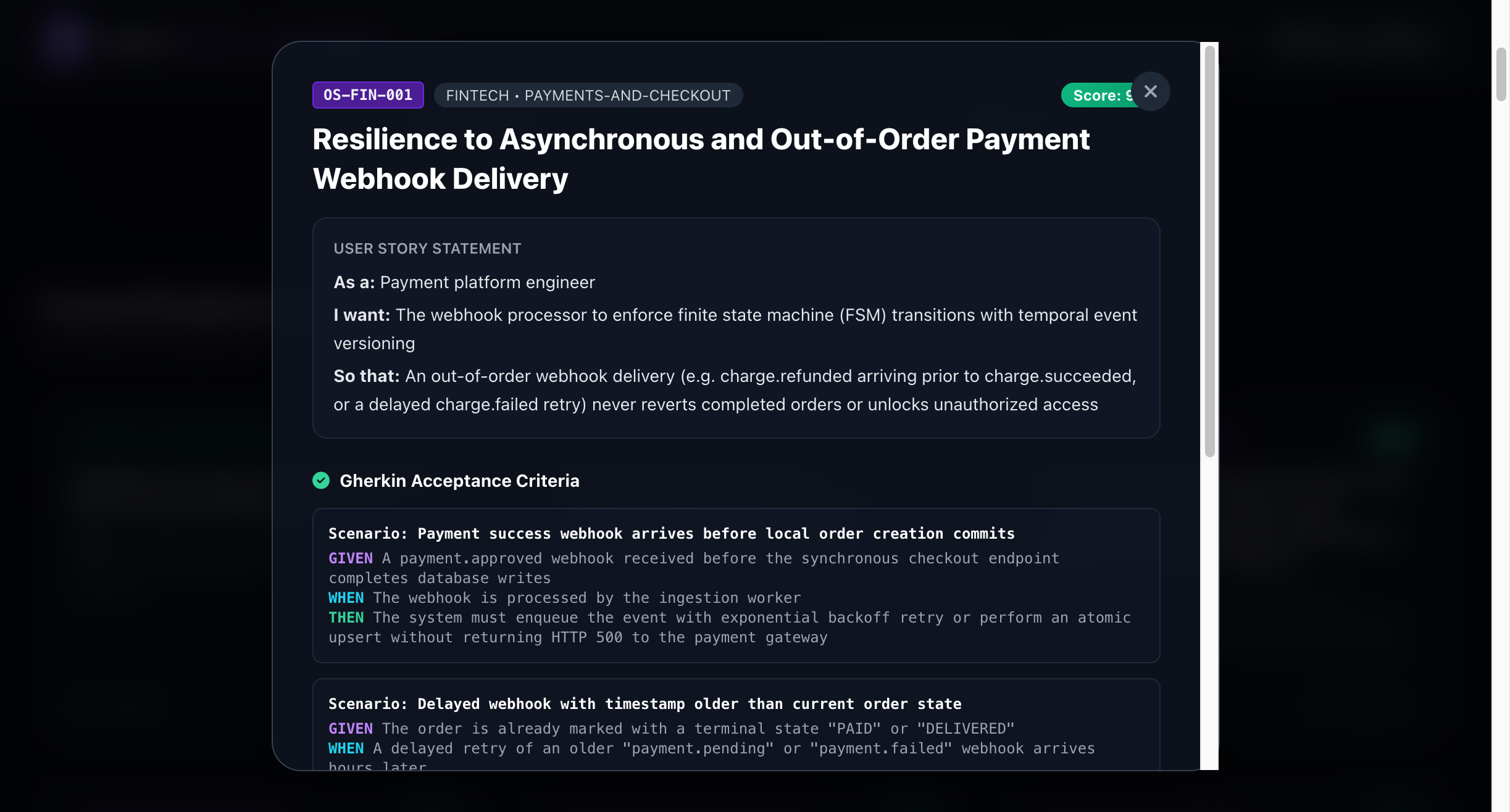
Get it



Stories are Markdown files with YAML front matter under stories/<industry>/<domain>/. A story needs a real citation to be merged. Contributing guide.